
Middlesex Police Blotters Are Municipal
No single Middlesex County agency runs a complete multi-day arrest log. Connecticut abolished county government long ago. The old county jail functions moved into state administration. Arrest records today begin with municipal police or Connecticut State Police. They can also start with whichever agency made the arrest. The county label helps you find towns and court routes. It does not identify a booking authority.
Middletown's adult arrest log is a dated PDF with detailed rows. It typically covers about a week. The run date is later. Cromwell's activity page links daily reports plus a weekly press arrest log. Clinton publishes no current blotter index. Its official report request serves as the fallback. The covered period belongs beside every Middlesex citation for that reason.
Middlesex Arrest Log Source Map
Know the town and agency first. Then the multi-day window works well. A state police arrest or an event in another Middlesex County town may never reach the three municipal sources below.
| Publisher | Format | Practical use |
|---|---|---|
| Middletown Police | Dated adult arrest-log PDF | Detailed rows over a stated multi-day period |
| Cromwell Police | Weekly press arrest log | Multi-day arrests distinct from daily activity |
| Clinton Police | Records request | Official path when no public log is available |
| Connecticut State Police | Agency records channels | State highway, troop, or state-unit arrests |
The newest arrest is not always the latest file. A source page can keep an older arrest PDF, swap links, or post a batch after coverage closes. Record the file title and range.
Read Middlesex Arrest Logs Carefully
Treat a police blotter as a dated release. It ranks nobody by charge, notoriety, or booking photo. Follow the source's own time order and keep the language tied to the arresting agency.
- Open the official police page, not a copied directory link.
- Read the coverage start and end before reviewing names.
- Note the run or publication date as a separate field.
- Match the arrest date, incident number, charge, bond, and court date.
- Check the Judicial Branch docket for later status and disposition.
- Request the report from the arresting agency when the needed period is absent.
Chasing an event from today? Use Middlesex arrests from the last 24 hours and its same-day agency path. A Middlesex County police blotter serves a wider, slower window. It does not claim real-time updates. It does not duplicate the daily page.
Note: Keep an agency's publication date with any notes, since a later correction can change the context.
Middlesex Blotter Entry Fields
Middletown and Cromwell logs carry more detail than a basic activity entry. Their fields vary. Assume nothing unless it appears in the source; routine booking photos are not part of these local arrest logs.
| Field | How to use it |
|---|---|
| Name and agency details | Identify who issued the arrest record |
| Arrest date and time | Place the event inside the covered period |
| Incident or case number | Use in an agency report request |
| Charge, code, and count | Treat each as an charge at arrest |
| Arresting officer | Agency field shown in some logs |
| Bond | Initial release term, not a case outcome |
| Court date and location | Route for checking the later docket |
| Run date | Shows when the report was produced |
Booking numbers, facilities, release times, and photos may be absent. That does not void the arrest row. Police logs and custody systems keep different records: DOC search tracks state custody, while the Judicial Branch search follows the case.
Middlesex Weekend Arrest Timing
Weekend and holiday arrests in Middlesex County follow no promised posting schedule. Cromwell posts daily files plus a weekly press log. Even so, the department does not promise same-day posting for every incident. Middletown's next multi-day PDF often folds weekend arrests in. The report runs after that window closes. Clinton, by contrast, sets no public log cadence at all.
A gap means nothing by itself. Missing entries never prove that no arrest occurred. Pull the next dated PDF. Then confirm which agency made the arrest, and contact that records bureau if the question still stands. Court dockets run on their own timetable, too. Someone released from a local lockup may never show up in Connecticut DOC. A person moved to state pretrial custody may appear there later.
Batch posting distorts trends. A cluster of rows uploaded together does not mean arrests surged that day. Always compare the arrest dates and hours, not the day the PDF link went live. Charge counts deserve the same care. One incident can carry several alleged offenses. Count rows or charge lines without the incident number. That still gives no sound count of people or events. Omissions matter as well: protected cases and delayed reports can leave a simple total incomplete. A Middlesex County blotter helps you locate a named source record. It cannot measure crime across the county.
Middlesex Official Records Workflow
The Middletown Police Records Bureau page names the official report path for Middlesex arrests. Reports there pass through a release review.
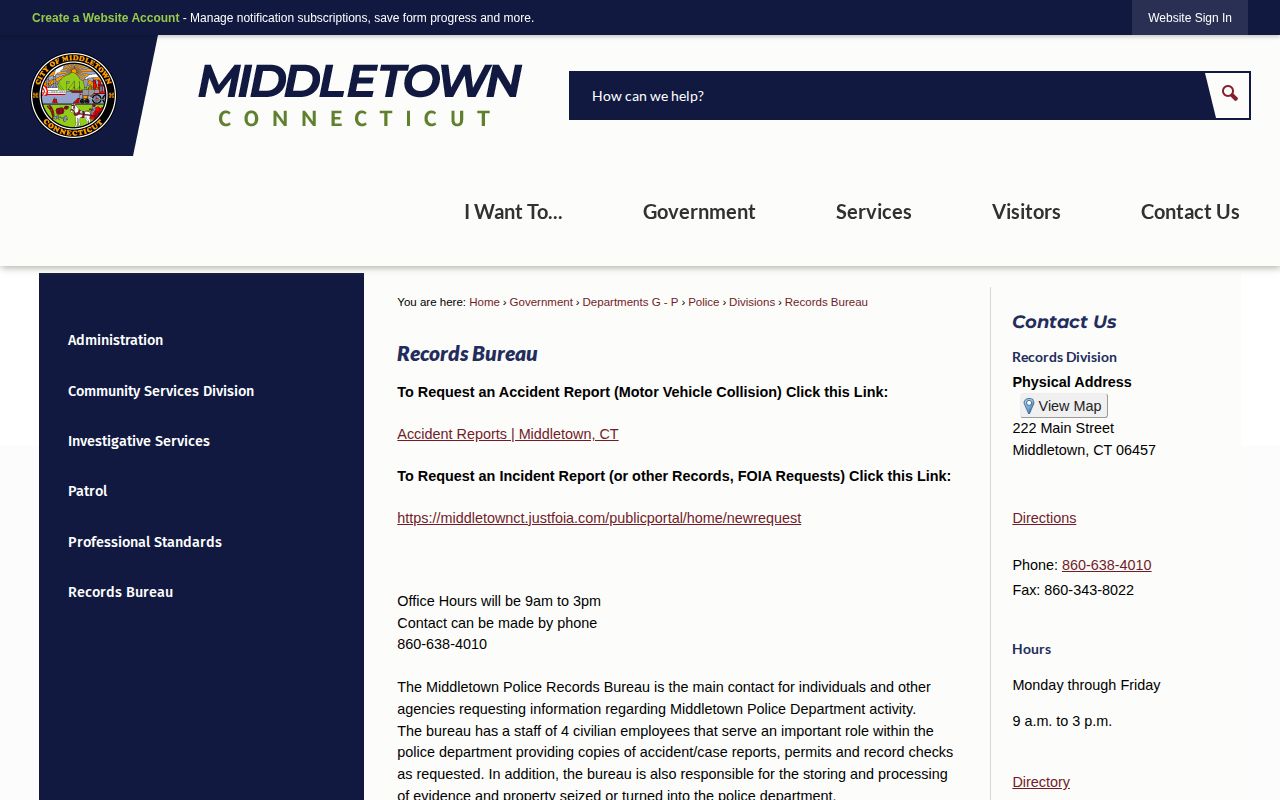
When an arrest PDF disappears, this route beats a copied log or a search-result excerpt. The Middletown JustFOIA portal handles the city's online record requests.
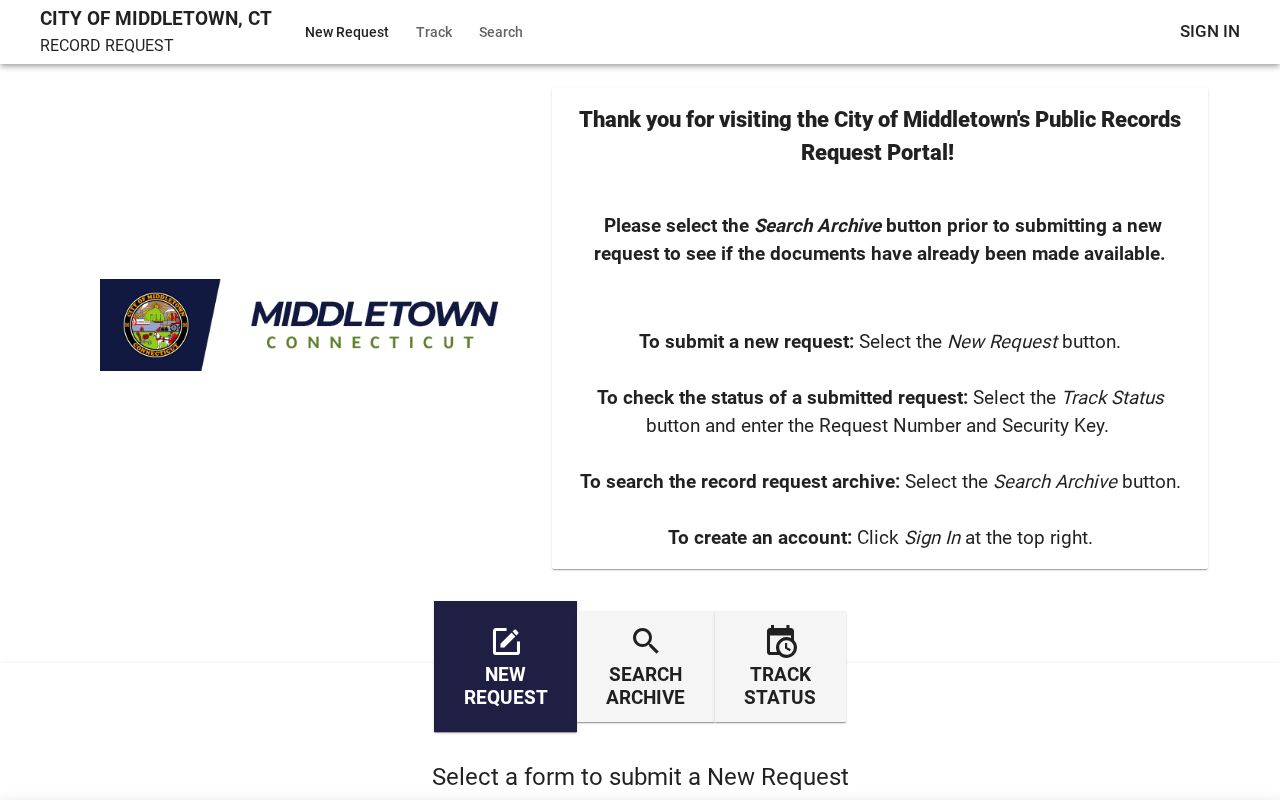
Name the agency, case number, date, and record type.
Middlesex Arrest News Is Secondary
News helps when the municipal log scrolls off. Patch Middletown Police and Fire runs recurring arrest and police-log coverage. Middletown Press and CT Insider publish blotter and event stories too. These stay secondary. Articles may be delayed, corrected, or removed. Some sit behind access limits.

News stories about Middlesex County arrests serve a different purpose than the police log itself. They are snapshots, not records. A photo in an article could be a file picture. It could also be a scene shot or an image handed over by the department. None of those is a booking photo by default. An archived Middletown Press police blotter preserves the older article format. Use its publication date for the timeline. Then confirm the arrest itself with the agency or the court docket. Archives fill gaps in a chronology. They cannot extend the official log. An article may summarize only selected arrests. It can drop a later correction, or run a headline that drifts from the agency's formal wording. Search by publication date, then circle back to the municipal records custodian.
Middlesex Arrest Directories Need Caution
Middlesex County, Connecticut lacks a dependable third-party arrest directory. RecentlyBooked covers other Connecticut counties and skips this one. Mugshots.com has a Connecticut category with no Middlesex page. Arrests.org, Mugshots.zone, and Busted Newspaper also lack county coverage here. Official sources come first, always. One site stands out as a cautionary example. CTArrests.org's Middlesex page exists, but it is unofficial and stale. Its structure is at odds with how county government actually works. It even labels the Middletown Police address as a county sheriff office. That error shows why every name and address should be checked against the issuing agency. A third-party mugshot, charge, or date is never proof. Build no gallery from these sites. Watch for name collisions with Middlesex County in another state.
Middlesex Arrest Archives and Retention
Municipal websites never promise a full archive of every Middlesex County arrest log. Depth is practical, not legal. The oldest file that still opens sets the limit. When a period is missing, ask the police records custodian first. Local arrest records usually stay with the town. They move only under an approved transfer schedule.
An archive request should name the issuing department, the approximate arrest date, an incident or case number, and the record type. Ask whether the material still sits under the current municipal public-safety schedule. A schedule sets minimum handling rules. It cannot promise that a certain booking photo or online PDF survives. Legal holds, erasure rules, and the exact record series can all change the answer.
The Connecticut State Library schedule index explains minimum retention, historical value, transfer, and lawful destruction. Retention always depends on the record series. Erased, sealed, juvenile, and protected material may simply be unavailable. For older records, the State Library collections and Russell Library's Middletown Press holdings are useful stops. Neither turns old news into an official arrest record.
The arresting department remains the first archive request. When an official PDF vanishes, keep the citation and date notes rather than reposting a sensitive copy. The State Library collections page offers finding aids. Russell Library identifies local Middletown Press holdings. Those paths support research into county arrest history.