
Find Middlesex Recent Arrests
Middlesex County works as a geographic label, nothing more. County government in Connecticut ended in 1960. The old county jail system moved into state hands later that decade. So an arrest might come from Middletown Police, Cromwell Police, Clinton Police, Connecticut State Police, a specialized state unit, or a federal agency, and each one keeps its own report. A broad county search can miss a fresh arrest even when the police record exists.
Search the narrowest window first. Arrests Last 24 Hours covers same-day checks and the limits of Cromwell's activity reports. The Police Blotter compares the longer Middletown and Cromwell releases against Clinton's request-only route. Neither page is a live county roster. When you find a hit, write down the agency, covered dates, run date, incident number, and court location. Those details tell you what the source really covers.
Read the log for what it is. A Middlesex arrest entry shows the arrest itself, the charge as booked, and where the case sits in process. Charges can change as the case moves.
Recent Arrests by City
The three biggest Middlesex County municipalities each give you a different search experience. Treat them as entry points, not the whole county. Fifteen towns sit inside county lines. A state police troop may make the arrest in a small town. It may also make one on the highway. So ask where the event happened. Ask which agency made the arrest, not just where a person lives.
| Place | Official starting point | Publication limit |
|---|---|---|
| Middletown Recent Arrests | Adult arrest log and Records Bureau | Multi-day logs can post after the covered period |
| Cromwell Recent Arrests | Daily activity and weekly press arrest logs | Activity entries and arrest-log rows are not identical |
| Clinton Recent Arrests | Police records request | No current official online arrest log was verified |
Middletown Police keeps its own initial reports and runs a Records Bureau. Cromwell posts daily activity. It also posts a separate weekly press log, with disposition codes that need context to read. Clinton offers an arrest-report request form. It promises no fixed fee or turnaround, though. Keep those differences in view. A missing web feed proves nothing about whether arrests occurred.
Middlesex Arrest Roster Reality
Middlesex County has no county booking authority today. There is no county sheriff arrest roster, no jail booking feed, no posted photo policy. Some older directory pages blur Middletown Police into a fictional sheriff office. The real address, 222 Main Street, belongs to Middletown Police. Treat it as a municipal department, not a county jail.
The closest official channels each answer a different question. A town police log can list an arrest date, the charge, bond, court date, and the arresting officer. The Connecticut Judicial Branch tracks the docket and case status once a court record exists. For statewide custody, the Connecticut DOC inmate-search page searches by name, DOC number, or birth date. State custody covers sentenced people and those awaiting trial, though it misses many town bookings.
The official Connecticut inmate-search instructions mark the starting point for the statewide custody lookup.
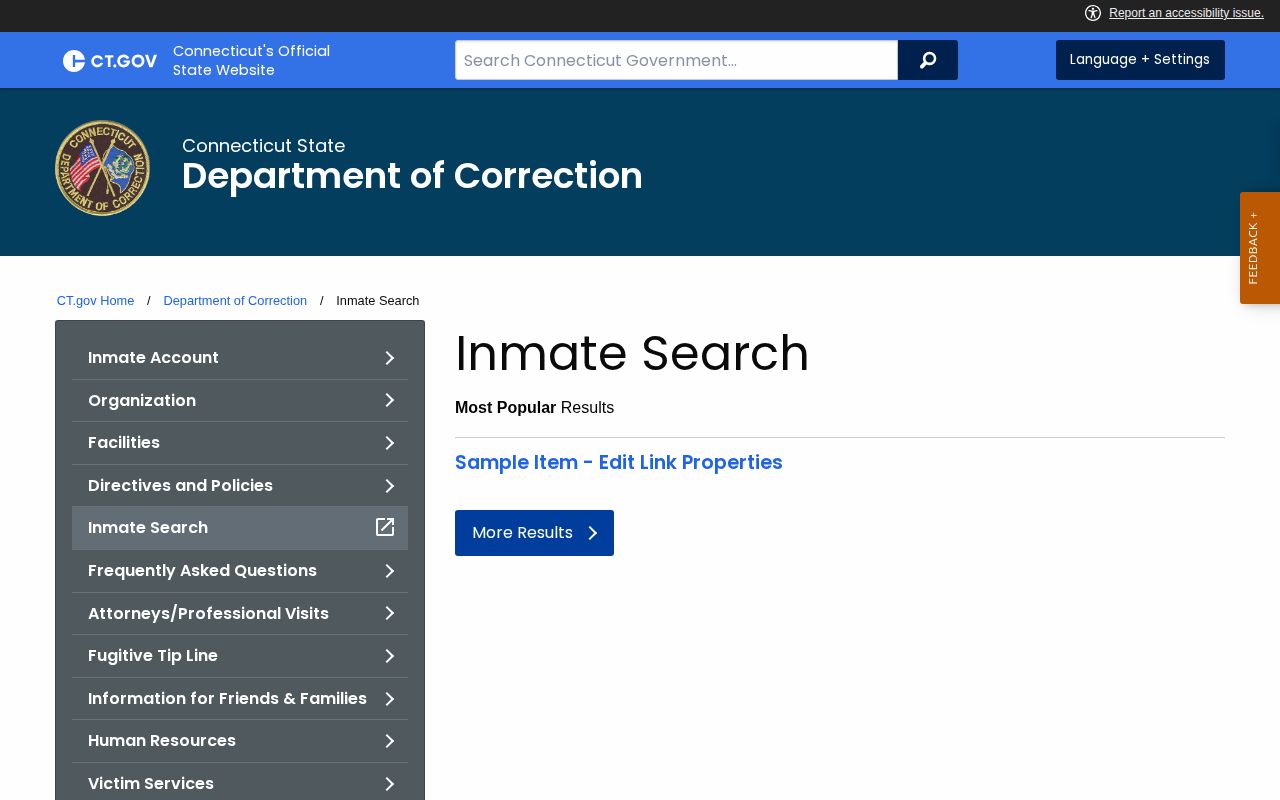
That screen is a state custody doorway. It is not a Middlesex County recent-arrest roster. Hartford Correctional Center is a regional clue, not a county jail. Its own page says the facility mainly holds pretrial people. It serves courts including Middletown. Placement depends on custody level and transport. It also depends on classification and bed capacity. Someone released after local processing may never reach DOC at all. A person moved to federal or immigration custody lands in a different locator.
Request Middlesex Police Records
When no online log exists, a records request is the right fallback. It is also the fallback when the log lacks the booking sheet, arrest report, photograph, video, or bond form you need. Connecticut General Statutes §1-215 and Chapter 14 govern public arrest records. They also govern freedom-of-information access. The agency's current form controls where and how to submit. Send the request to the arresting department. Or send it to the state agency. A Middlesex County sheriff does not exist to receive it.
- Identify the arresting agency and municipality.
- Describe the exact record type, such as an arrest report, booking sheet, photograph, or body-camera file.
- Give a narrow date range, incident number, and name when known.
- Ask for the current fee and delivery method before committing to a large request.
- Preserve the response, source URL, covered period, and date received.
Middletown says reports usually open up five to seven days after an incident. A supervisor review comes first. Its posted fees run $0.50 per non-certified page. The first certified page costs $1, plus $0.50 after that, and video and mailing charges are separate. Cromwell tells you to ask the clerk about cost and timing. Clinton points to a Records lobby fee sheet and posts no fixed online turnaround. State law sets fee ceilings and may allow prepayment. Check the agency's current instructions first. The Middletown public-records portal gives you an official electronic way in.
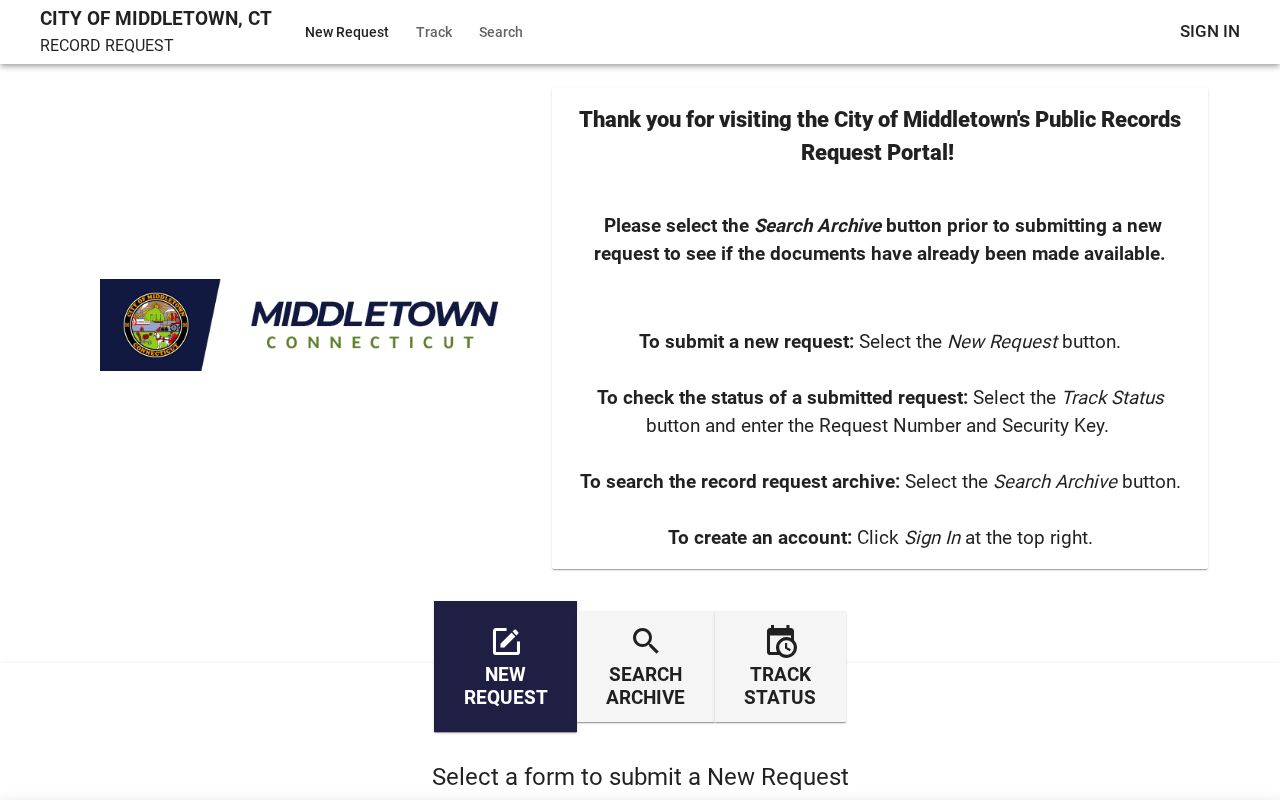
Note: The portal routes your request, but submitting it never guarantees every item you asked for will be released.
Middlesex Booking Photos
Middlesex County publishes no central booking-photo gallery. Middletown and Cromwell put their arrest material out as text or PDF files. Routine booking images are not part of those logs. Clinton's records form mentions photographs, tapes, and video, but that wording opens a request path rather than a public photo feed. The DOC photographs page covers facility images. A state custody record may include an offender photograph governed by DOC rules. News coverage is different. A police courtesy image, a file photo, or a scene shot may run with a story. Labeling one a mugshot takes confirmation. Screenshots and social posts deserve the same caution. To seek a photo through public records, name the agency, the incident, the date, and the image type. The agency then reviews juvenile, victim, sealing, erasure, and pending-case limits.
- Booking photograph
- An identification image made during an agency's intake process.
- Courtesy image
- A picture supplied to a news outlet that may or may not be a booking photograph.
- Disposition
- The court's later resolution of a charge, separate from the arrest image or police entry.
Public access does not make every detail safe to share. Juvenile identities and protected victim information must stay out of any repost. Even an official source can hold an address or context that calls for restraint.
Track Arrests Into Court
An arrest record and a court record answer different questions. The police log captures the start of a case. It lists the charge and often a court date. From there, the Connecticut Judicial Branch criminal lookup takes over, showing a docket, court location, case status, scheduled events, and any public disposition. Online case information is still not the official court file. Sealed or protected cases never appear in public results. The path is simple. Arrest comes first, then police processing, release or temporary custody, arraignment, later court events, and disposition. A promise to appear or a bond can end local custody before any DOC entry exists. Someone held pretrial may instead land in a DOC facility serving the Middletown courts. Compare names, birth dates when lawfully available, dockets, and incident details. That habit prevents false matches. The official criminal case-search entry point makes the court checkpoint easy to reach.
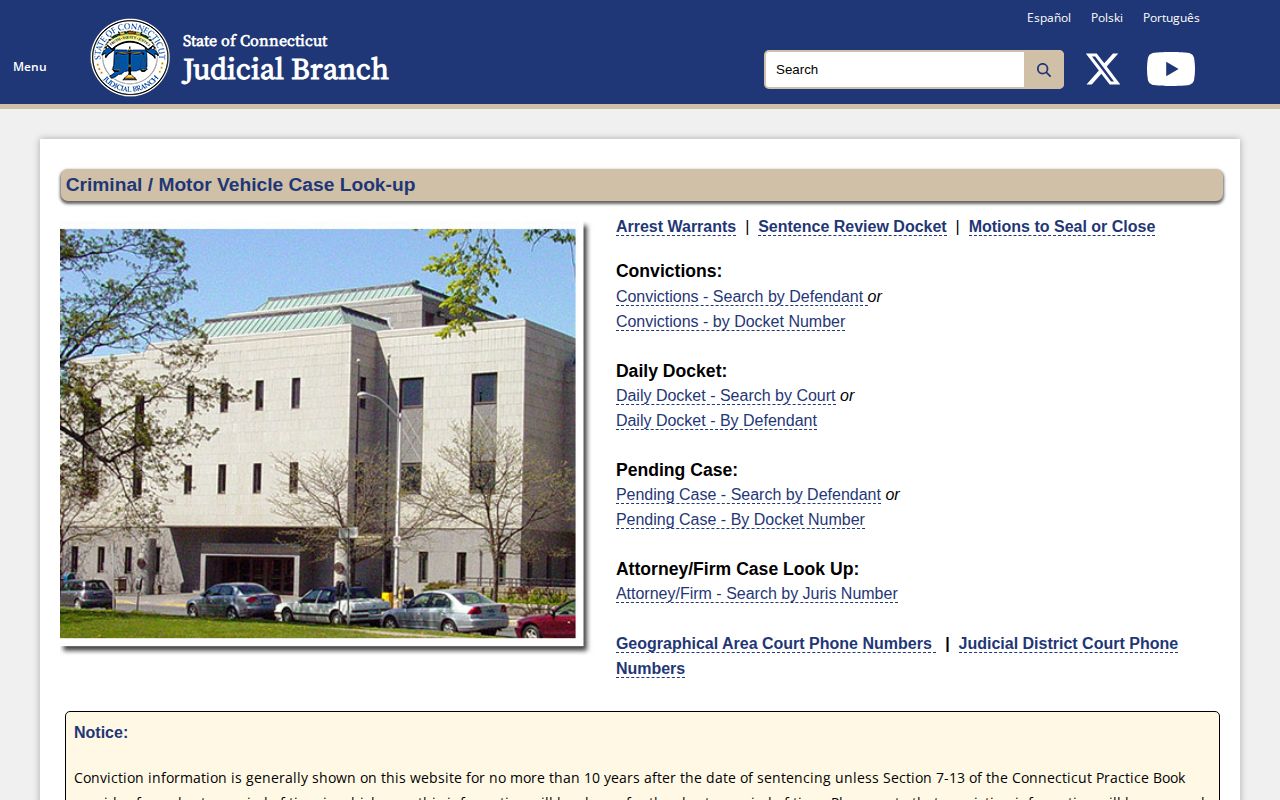
The Middlesex Judicial District courthouse sits at 1 Court Street in Middletown. The official directory lists a chief clerk. That number is 860-343-6400. Send official-file questions straight to the clerk. Separately, the State's Attorney and victim-information pages open support routes, including CT SAVIN details.
Middlesex Custody Alerts
Connecticut VINE, called CT SAVIN in Judicial Branch materials, ties court and DOC status notifications together. It is not a same-hour arrest list. It offers no municipal mugshot gallery either. The DOC victim-services page splits "OFFENDERS" for DOC information from "OFFENDERS WITH COURT CASES" for Judicial Branch matters. You may need to register in both branches. The VINELink Custody Check covers search and registration steps in detail. Exact names, DOC numbers, docket numbers, and case numbers cut down false matches. A no-result stays inconclusive. The event may be too new, sit outside covered systems, involve a release before DOC admission, a sealed case, or a federal hold. Official pages have listed different phone numbers. Trust the number the live VINE or DOC service shows today. There is no Middlesex sheriff app. The CT Safe app takes suspicious-activity and public-safety reports, not arrest-roster entries. Clinton's alert center adds public-safety updates. It is not a full booking feed. App notifications, press posts, and police social updates all deserve a source timestamp plus an official agency label.
Middlesex Arrest Warrants and Wanted Notices
An outstanding warrant is not a recent arrest. No Middlesex County sheriff most-wanted list exists online. Connecticut OPM/CJIS fills part of the gap with monthly data on outstanding violation-of-probation warrants. Searches run by name, town, court location, or combined fields. Even so, that dataset is no universal live check on every warrant. The Paperless Arrest Warrant Network, known as PRAWN, serves authorized criminal-justice agencies alone. The public cannot search it. The official PRAWN page documents that restricted role. That description is not a searchable county wanted list.
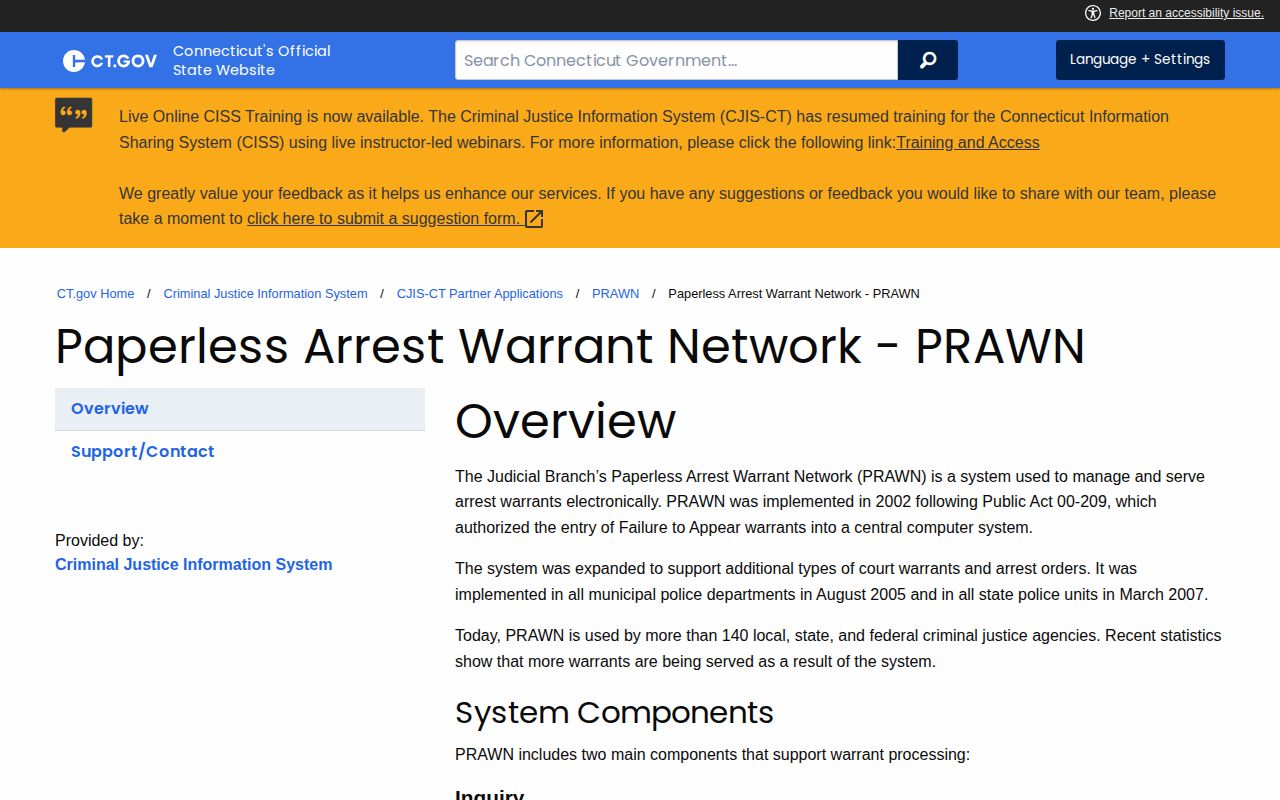
That restriction points people toward public court and agency channels. No one outside the system claims access to PRAWN. A warrant might exist. In that case, contact an attorney or the issuing court through a verified official channel. Never confront a wanted person or attempt a citizen arrest. Immediate danger belongs with 911, while non-emergency tips go through the named agency's official route. Confirm any result, because warrant status can change.
Connecticut Public-Record Boundaries
Section 1-215 opens the door to certain public arrest information, yet the door has limits. It builds no statewide gallery of booking photos. Juvenile arrest records sit outside it entirely. State law also shields sealed or erased matters. It protects witness identities, protected victims, and details that could compromise an active investigation. Read any police release in Middlesex County with those boundaries in mind.
Connecticut sets no general mugshot-site statute and no formal anti-pay-to-remove process. That gap is not legal advice. Remedies still exist on separate tracks. Options include correction by the releasing agency, an FOI review, court sealing or erasure, Clean Slate relief, or a publisher's own correction policy. Nobody should pay a removal service on promise alone. A factual fix or a legal erasure never requires a fee.
The statutory arrest-record framework appears in the current public-records chapter.
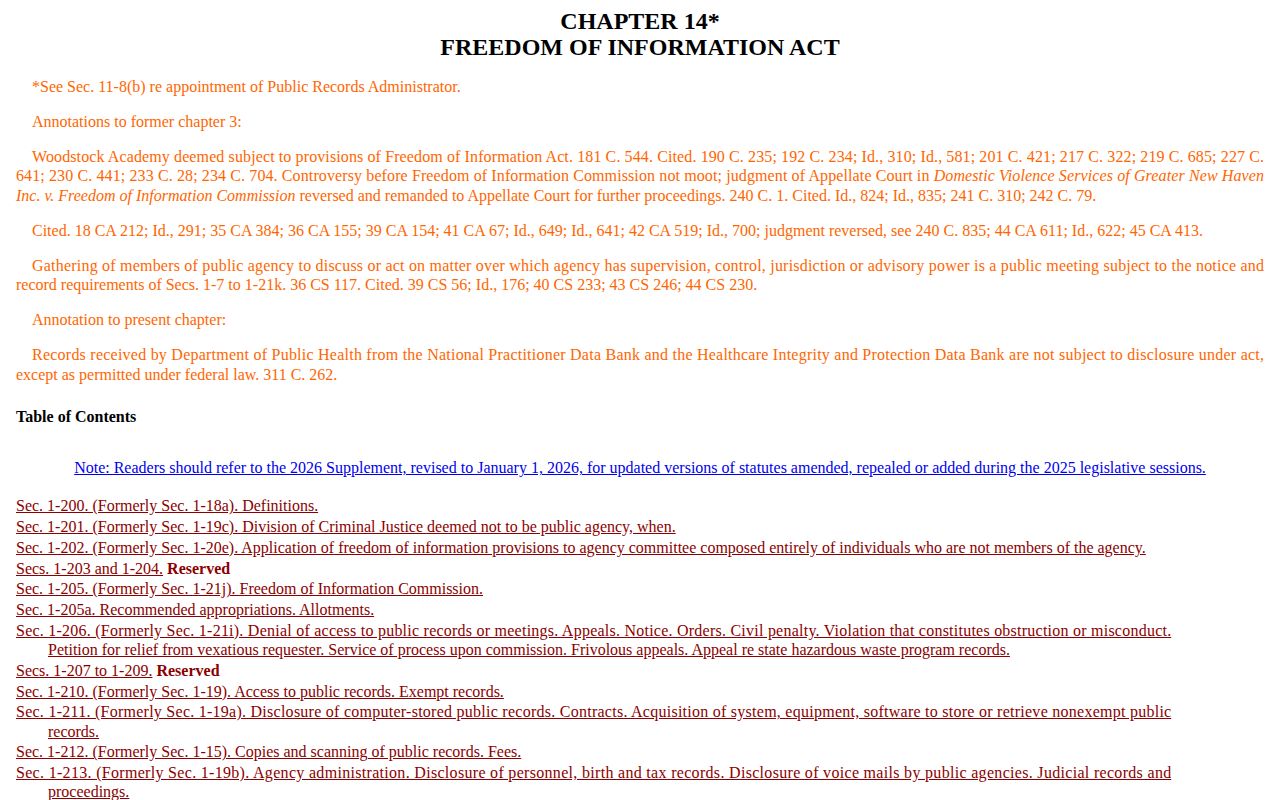
Think of the statute as an access framework bounded by law. It is no license for a permanent photo archive. Clean Slate can erase qualifying convictions. The statutory periods and conditions must pass first. Older cases may need a petition instead. Sections 54-142a and 54-142k govern erasure and updates to conviction and nonconviction information. Even then, erasure is not a promise. Not every cached copy or private reprint disappears at once. Send proof to the agency or court that controls the record. Separately, ask any publisher still showing stale material to correct it.
Older Middlesex Police Records
Start an old-record search with the municipal records custodian. The Connecticut State Library schedules set minimum retention and control how each record series is transferred or destroyed. No schedule guarantees a given booking sheet or photograph survives. Retention turns on legal holds, case status, agency practice, and the exact series involved.
Municipal public-safety schedules cover arrest and booking sheets, prisoner-property forms, recordings, bond records, and more, each with different periods. An older schedule illustrates but does not bind. DOC material follows separate statutes, directives, and schedules. For a historical DOC request, include the DOC number if known, plus facility, date range, and record type. Keep in mind that a historical custody file says nothing about who is in custody now.
If an agency search comes up dry, the State Library's collections and finding-aid route may help. Russell Library identifies Middletown Press holdings for older news work. Newspaper archives are secondary sources. Keep the publication date, separate reporting from the official police file, and look for a later court disposition.
The type of material matters too. An arrest sheet, a prisoner-property record, a recording, an evidence log, and a case investigation file can each sit in a different series. One schedule date fits none of them all. An agency may also keep a record longer. The reason could be a pending case, appeal, claim, audit, or another lawful hold. A web link can vanish while the official record stays with its custodian. Ask the records office to name the current schedule and series whenever age drives a denial or an online PDF has gone missing.
A photograph deserves its own inquiry. An existing arrest report does not prove a releasable image exists. Erasure may not treat every investigative by-product alike. State Library guidance rejects both extremes. No rule keeps every old image forever, and no rule erases every copy at once. Name the exact image, incident, agency, and approximate date. Compare the response against any erasure order or later court record before concluding anything.
History is not current custody. The old Middlesex State Jail in Haddam closed in 1969. Its name lingers in old references but points to no present booking destination.
Custody Outside Connecticut
A blank Connecticut result does not always mean freedom. Someone arrested in Middlesex County can land in federal or immigration custody instead. The Federal Bureau of Prisons locator tracks federal cases, and it sits apart from the state DOC system. Immigration detention works differently again. The ICE Online Detainee Locator relies on its own identity fields, and it plainly warns that some people will not show up at all. U.S. Marshals pretrial custody adds another wrinkle, since detainees may sit in contracted or partner facilities, and no public Middlesex booking-photo roster comes out of it.
Match the system to the paperwork. Court papers or an arrest notice will name an agency, and that agency points you to the right records. A federal court event, immigration detention, state DOC admission, and a town police booking are four different things. Blending them into one custody claim only creates confusion. When location truly matters, go back to the agency handling that stage.
Third-party sites belong at the end of the list. RecentlyBooked, Mugshots.com, Arrests.org, Mugshots.zone, and Busted Newspaper list no verified current Middlesex County, Connecticut section. CTArrests.org keeps a stale unofficial county-style page, and it wrongly labels the Middletown Police address as a sheriff office. Local coverage from Patch and CT Insider can add chronology, though articles run late, get corrected, sit behind paywalls, or rely on courtesy photos. None of them settles a custody question on its own.
Verify Every Middlesex Arrest
A careful Middlesex arrest record includes the source agency, the source URL, the event date, the period covered, and when it was published. Label what each item is: an arrest entry, a custody status, a court event, or a final court outcome. The labels are not interchangeable. A weekly PDF shows arrests, not current custody. A DOC result shows custody, not a court verdict. A news report never replaces the originating file.
Use each result for a lawful, source-focused purpose: locating an official record, tracking a court matter, checking custody, or signing up for an authorized status alert. Public availability does not settle anything about current custody either.
Fix stale or legally changed facts at the source. When an agency corrects a record, a case is sealed or erased, or the court outcome changes, keep the proof and ask each publisher to update the old version.
Similar names need more than a quick glance. Compare the town, the age or birth date when lawfully shown, the incident number, the arrest date, the court location, and the docket number. Stop when details conflict. One person can pass from a police log to court, then into DOC custody or back home, while each system keeps a different snapshot. Log that sequence with dates rather than merging everything into one claim. That habit keeps Middlesex arrest records accurate and makes corrections far easier.